Q: Removing one from eleven makes it ten, removing one from nine makes it ten.
How is that?
A. Roman numerals
Eleven is XI, Nine is IX whereas ten is just X!
Q: Removing one from eleven makes it ten, removing one from nine makes it ten.
How is that?
A. Roman numerals
Eleven is XI, Nine is IX whereas ten is just X!

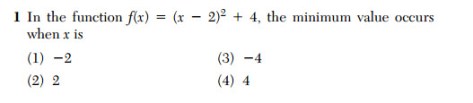
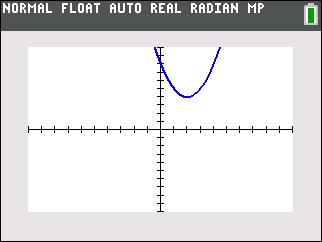
Every student should get 2 points from this type of question
Jan 2015 Regents #3:
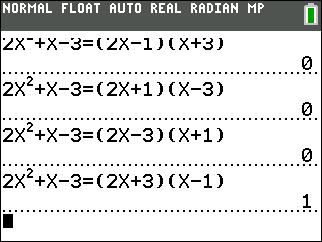
This can be seen as a factoring question but there are many ways to do this question!!
2. Using the logic values on the TI-83/4

In the photo above you can see that The answer is #4 because the truth value is “1” or TRUE.
3. Using Y1 and Y2
Students can also put the original equation into Y1 = 2x^2 + x – 3 and then try the other 4 equations into Y2. They can check the graph to see if the two Y= are identical and/or they can check the Table to see if the xy points match.
The test is 3 hours so students should spend time checking their answers with multiple methods!
This 2 point question answered correctly can help students pass the Regents and understand the Math.
Do your students know this? This is an easy 2 points
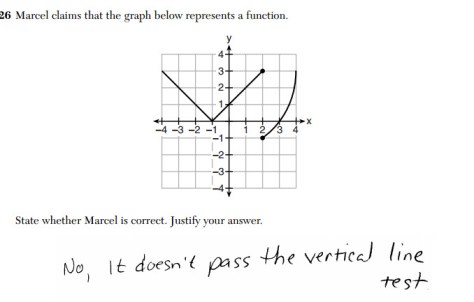
Word definition of a function: Every x must have just one unique y
Graphical definition of a function:
Does it pass the vertical line test? If not, it is not a function.
Drawing a vertical line at x = 2, your vertical line will pass through both dots and therefore this is NOT a function.
Easy 2 points!!

“You need to see it to know it.”
Regents Review: Get the Math and Get the Points
Students benefit from mixed Regents problems practice to improve their knowledge, confidence and performance on the new, more challenging Common Core Algebra I (and Geo) exams. We will discuss building compare/contrast skills, increasing TI-83/4 knowhow and increasing persistence. Come to this session to share teaching/learning strategies to enhance learning and help students graduate high school.
As of May 2016, there are 6 Algebra I Regents exams
http://www.nysedregents.org/algebraone/ and/or
http://www.jmap.org/JMAP_REGENTS_EXAMS.htm
Q: What whole number can be added to 36, 300 and 596 so they all become perfect squares?
A: 925
36 + 925 = 961 (31^2)
300 + 925 = 12225 (35^2)
596 + 925 = 1521 (39^2)
Can try with a list of perfect squares subtract 36 and see if it is a perfect square. If it is, now subtract 300 and check that answer. If that one works, then try subtracting 596.
The lowest perfect square we can start with is 625 (25^2) as it is the first one larger than 596.
625 – 596 = 29 which is not a perfect square so we move to the next perfect square, 676 (26^2).
This was a modified problem from a 1989 contest:
https://www.artofproblemsolving.com/wiki/index.php?title=1989_AIME_Problems/Problem_7