Q: In the town of Mathville, Anne is 5 years old.
The composition of the families in Mathville are as follows:
2% include five or more children
7% include four children
14% include three children
31% include two children
16% include one child
30% do not include any children
What are the chances that Anne lives with two brothers and no sisters?
(Consider all children living in any given house as siblings)
A: about 6.6%
First we have to assume that there is a 50-50 chance for each child’s gender (although studies have shown if you already have 2 boys, you are likelier to have another son rather than a daughter).
We also have to assume that 5 is the number of children of the very large families.
Since Anne is a child, she cannot possibly live in a household with no children.
So we need to think about this as a weighted average:
There is a (3×14)/(0 x 30 + 1 x 16 + 2 x 31 + 3 x 14 + 4 x 7 + 5 x 2) or 26.582% chance that she lives with two other children. Now we have to figure out the probability that both of the other children are boys.
There is a 50% chance that each of these other children is a boy, so there is a 25% chance that they are both boys (the combinations for the two other children are: BB, BG, GB and GG), Therefore, the probability that Anne lives with two brothers is 25% of 26.582%, or about 6.6%.
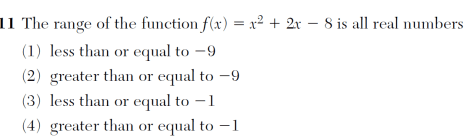
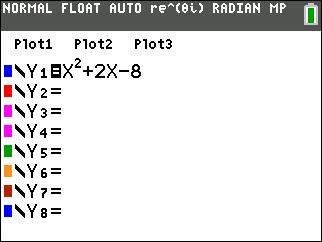
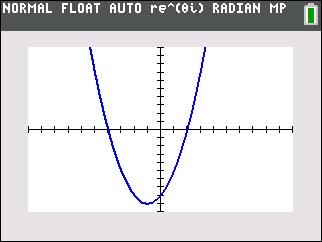
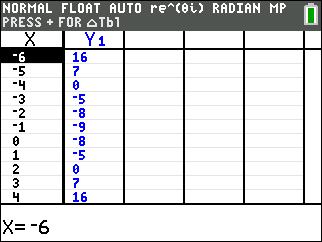 Looking at the graph, the lowest y value is less than -1. which can also be seen in the table above.



 Math Confidence by Robin the Math Lady