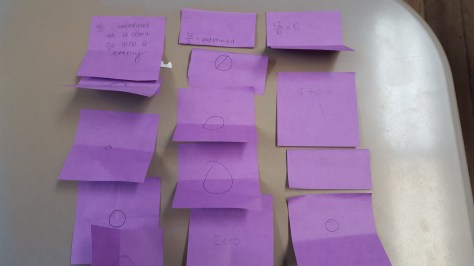
Most students thought 12/0 was 0 but it’s undefined!!
You cannot divide by 0: when counting by zeros…when will you get to 12? NEVER!!
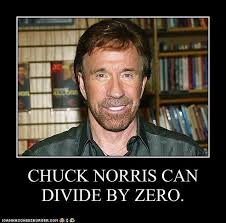
Most students thought 12/0 was 0 but it’s undefined!!
You cannot divide by 0: when counting by zeros…when will you get to 12? NEVER!!
July 2012: The New York Times Sunday Review: the artwork below and the headline “Is Algebra Necessary?”. I was so stunned I couldn’t even think of how to respond, let alone write a Letter to the Editor (FYI, I have had 4 Letters published and many unpublished — this is something I usually love to do!). It took me a week and a half to think of a clever retort and by then it was too late to send a letter so here goes — let’s see if y’all see it :)
Hint :”What are the people in the cover drawing below doing?” (looking for a particular perspective)
Please comment or send a tweet by Weds 3/9 3PM .
Winner(s) will get a folder of their choice from http://www.jetpens.com/Folders/ct/2008
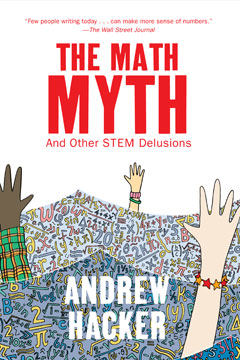
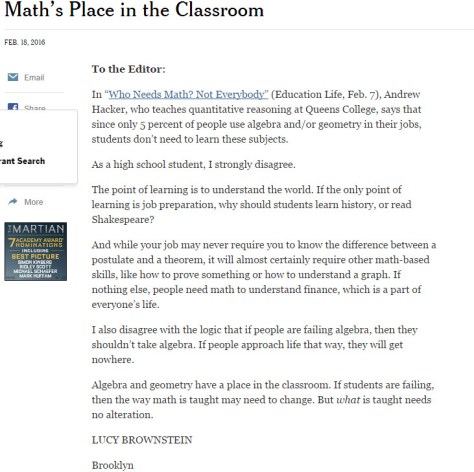
In response to Who Needs Math? in the Education Life of the NYT in early February, this high school student totally gets it!!!